

FEPRA Recycling · Glass
Bottles in. Sorted raw material out.
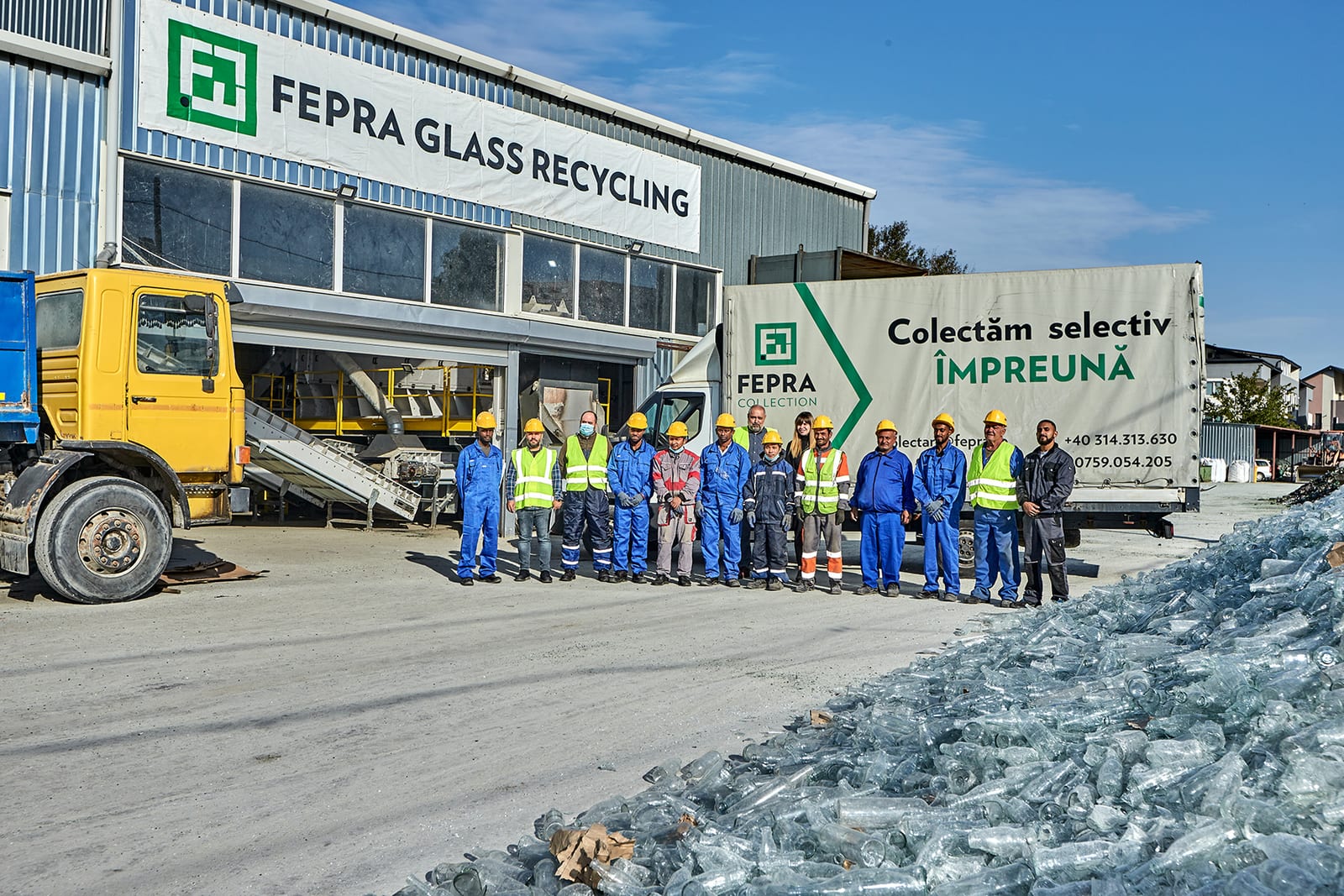
We run two glass recycling lines, in Buftea and in the industrial park in Brad. We turn glass packaging waste into cullet: clean, colour-sorted glass, ready for melting in packaging plants and other products that contain glass. The material has End of Waste status: it is raw material, not waste.
The plants
Two plants, the same specification
Buftea, Ilfov County
The largest glass processing capacity in the group, recently modernised. The line is automated and includes several optical sorters. This is where cullet and flint with End of Waste status are produced.
Brad, Hunedoara County
A line integrated in the circular-economy industrial park, on the same site as the PET line, which allows processing of the streams collected in the area.
What we deliver
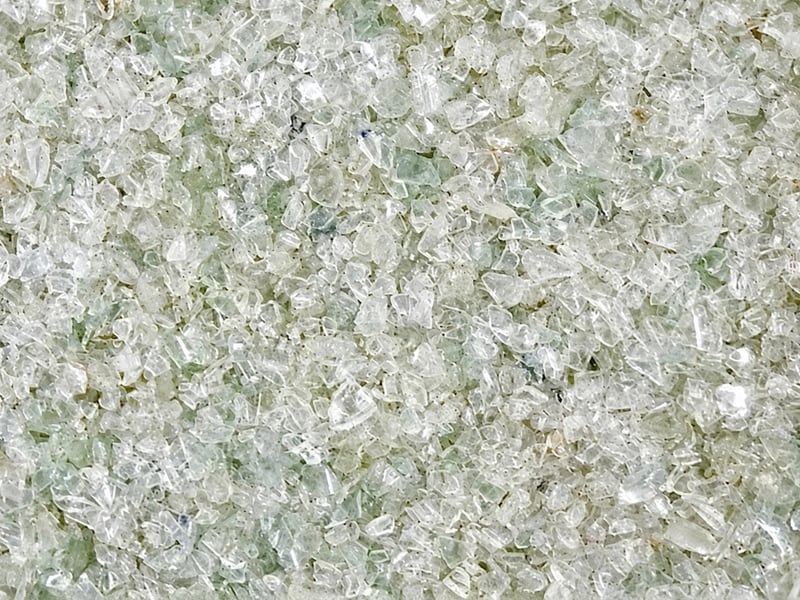
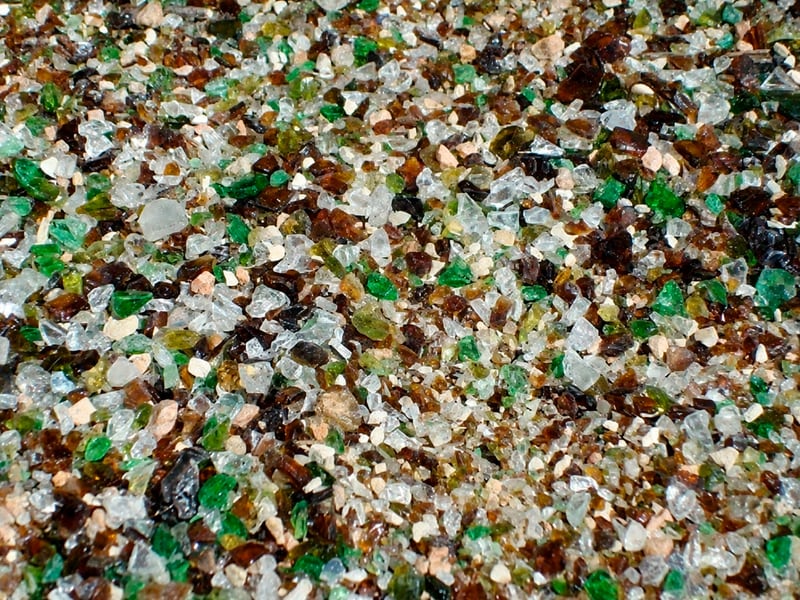
Cullet, in two grades
Clean cullet, optically sorted by colour. A high degree of purity for each colour is the essential condition for glass plants to be able to use the material.
How we work
We offer predictability
End of Waste status
The cullet produced in Buftea and Brad holds a certificate of conformity with Regulation (EU) No 1179/2012, which sets the criteria under which glass cullet ceases to be waste. For the buyer, this means a material with a clear legal classification: raw material, not waste.
Several optical sorters
The first removes ceramics, stones, porcelain, plastic and metal, the contaminants that do not melt in the furnace. The next ones sort by colour, in several passes, so that the distinction between colourless and coloured is complete.
Certified management system
ISO 9001, ISO 14001 and ISO 45001: quality, environment, occupational health and safety. Both sites are included in the certified scope.
European recycler
Operations in the European Union, a short supply chain, a smaller carbon footprint than material imported from outside the EU.
Vertical integration
Our own collection network and our own recycling plants. We outsource nothing essential in the chain.
On-time delivery, scalable capacity
Delivery schedules a production plan can be built on, with flexible volumes that grow with demand.
For collectors
Input material specification
We buy glass packaging waste, mixed.
Delivery: Buftea, Str. Răsăritului 57, Ilfov County · See on the map ↗ | Brad, Str. Avram Iancu 77, Hunedoara County · See on the map ↗
The glass line
The process flow
Phase I · Mechanical processing
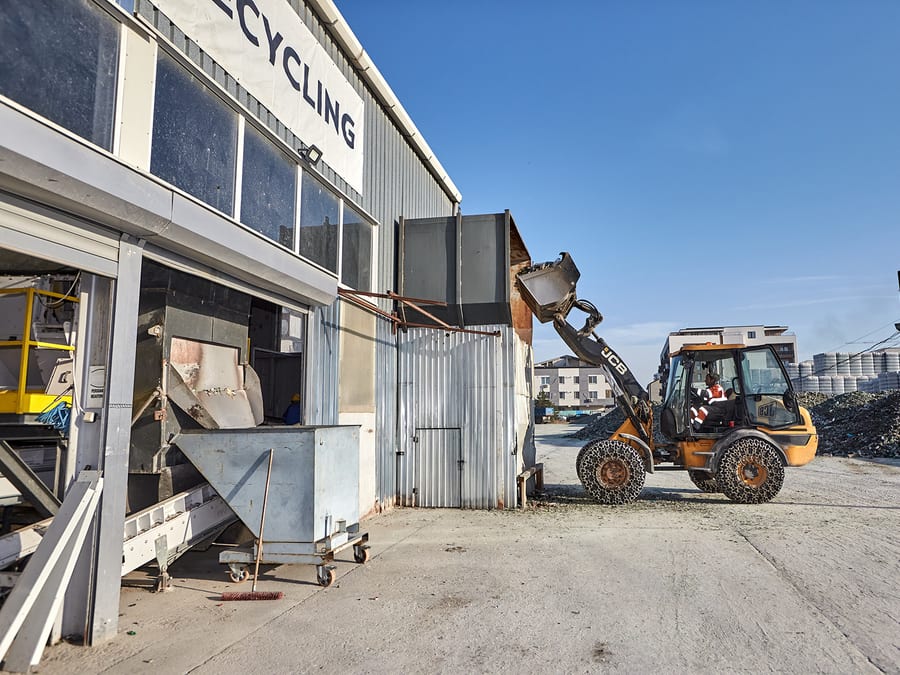
- 1Feeding
- 2Separation of ferrous and non-ferrous metals
- 3Crushing
- 4Double screening
- 5Re-crushing
Phase II · Refining
- 6Density separation
- 7Aluminium separation
- 8Second refining pass
Phase III · Optical sorting
- 9Removal of impurities
- 10First colour sorting
- 11Second colour sorting
What happens with the rest
Nothing goes to landfill
The line's technological yield is 95%: of every tonne that enters, 950 kilograms come out as colour-sorted cullet.
All the fractions removed from the main flow, ferrous and non-ferrous metals, ceramics, organic matter, paper, plastic and dust, are collected separately and handed over to authorised operators.
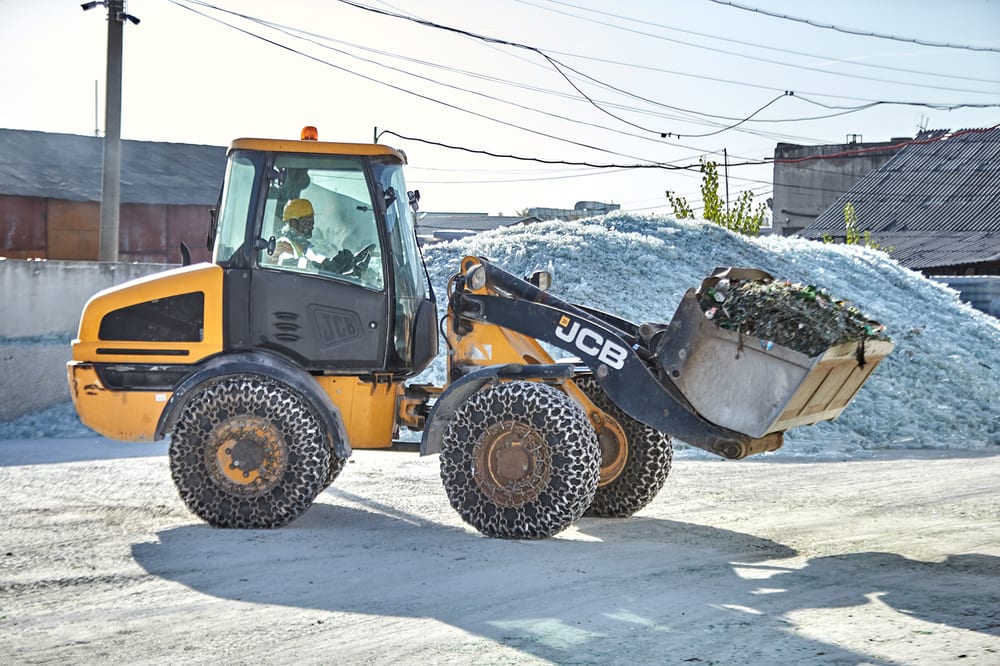
Traceable cullet, from a local source.
Buying cullet for packaging production? Ask for the data sheet and a sample.